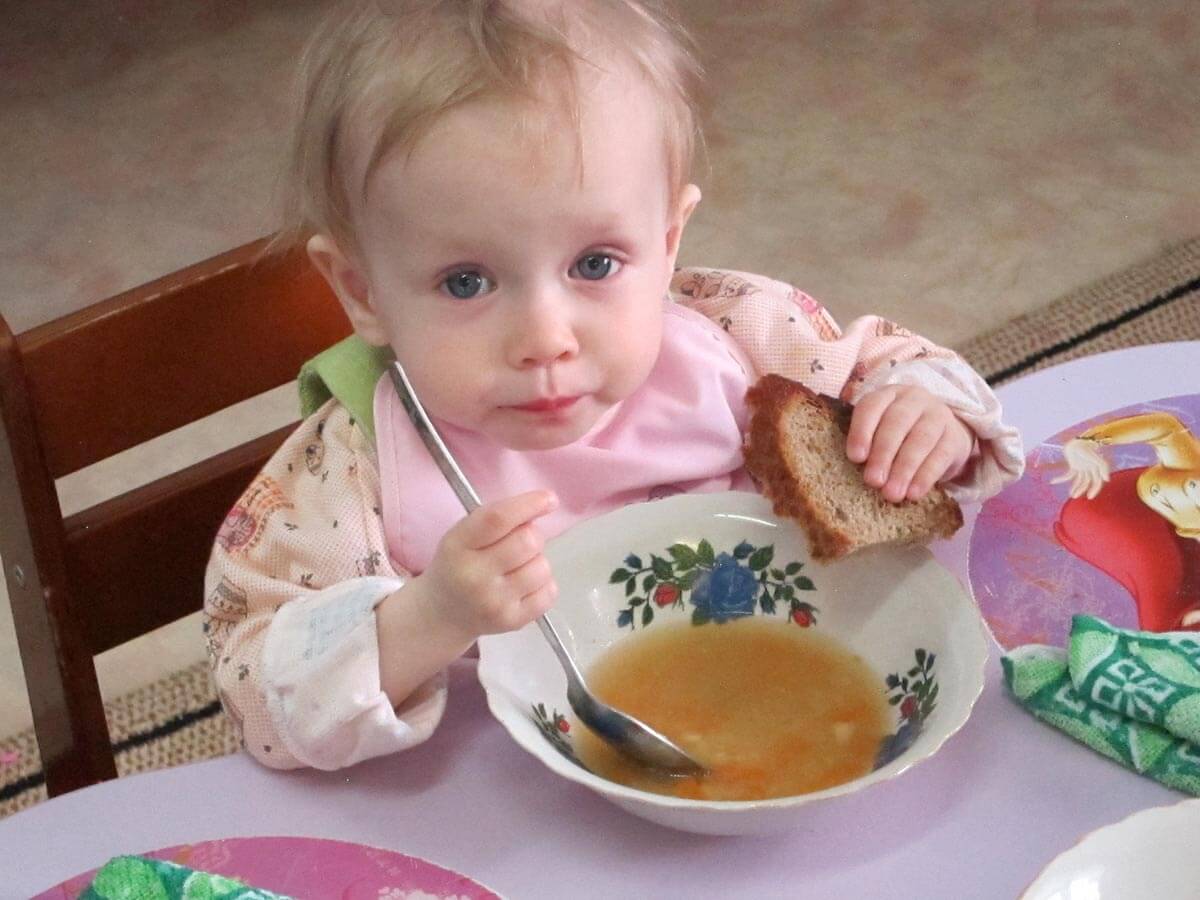
The transition diet is one you develop to help bridge the gap between your child’s native diet and what eventually will become her regular diet at home. Ideally this regular diet will be filled with high quality, nutrient-dense foods that your entire family loves. While some adoptive children transition quickly, others may require more time —weeks to months to a year or more.
The goal of the transition diet is to provide calories for growth and to encourage your child to eat without a battle. While providing nutritious foods during this transition is optimal, it’s not necessarily the goal (vitamin supplementation may be warranted.) Focus more on developing a warm and nurturing feeding environment that occurs at predictable times and encourages growth.
Other principles for the transition diet include:
At each meal, serve at least one food your child already knows and loves—even if you don’t like or approve of it.
Slowly introduce new foods to her diet and include foods commonly loved by all kids (pasta, yogurt, bread, crackers, pizza, spaghetti, cereal, pancakes, waffles, etc.).
Don’t make assumptions that your child won’t like healthy foods and don’t bring your food preferences to their plate. They may surprise you with what they like.
If your child rejects a food—don’t assume he doesn’t like it. Some children need to become familiar with a new food before accepting it. Try, try, try again and make sure you’re eating the food as children role model parent behavior.
Consider serving different formats of the same food—fried eggs, scrambled eggs, hard boiled eggs. Segmented oranges, sliced oranges with the peel on, orange juice. Texture and form are additional components to taste when developing food preferences.
Eat as a family and seat your child close to the family table or preferably at the table.
For infants—feed on demand. For children—set a consistent schedule for snacks and meals—with no more than 2-3 hours between feedings. It’s okay to feed a child between these set times if they ask for food. With time, you’ll all figure out the best schedule for feeding and children will learn that food arrives at predictable intervals.
Don’t worry if your child eats gigantic portions when they first arrive home—even more than you might eat! This is quite normal. Do try to limit their intake if they are eating or drinking to the point of vomiting. See a healthcare provider if you child regularly eats or drinks to the point of vomiting.
Remember the goal in feeding during transition is to provide enough calories and nutrients for your child’s body to do “catch up growth” and to then stabilizes their growth so it’s at a regular and consistent rate. The goal is not to move him from the lowest quartile of the growth chart to the highest quartile and then keep feeding him until he becomes overweight or obese.
For more information on this topic, check in with the health experts of Adoption Nutrition.
“Feeding became (and sometimes still is) the most maddening part of our day. I know meals need to be calm and pleasant but this can be extremely difficult in the first months. Never be afraid to make REALLY slow progress. Go backwards when first home if necessary to build trust (ie bottle feed even if past that). Keep at it! Slowly introduce new and healthful foods over time, combined on a plate with familiar foods.” -Jennifer, mom to Mireille & Merritt, adopted from Russia
3227 NW Thurman Street, Portland, OR 97210 |
|
|