General Diet/Summary • Nutrition Facts • Possible Deficiencies • Meal Patterns • Transition Foods • Recipes • Resources
The Former Soviet Union (FSU) includes: Armenia, Azerbaijan, Belarus, Georgia, Kazakhstan, Kyrgyzstan, Republic of Moldova, Tajikistan, Turkmenistan, Ukraine, Uzbekistan, Estonia, Latvia, & Lithuania

In Russia and the nations of the Former Soviet Union (FSU), full and hearty meals are considered important to maintaining good health. Traditional dishes from Russia and FSU have largely been dictated by what can be grown in a cold, damp climate. The regional variations in Russian and FSU cuisine are minor except for the foods of the more temperate southern nations, such as Armenia, where cuisine is more similar to Middle Eastern fare. Many foods are dried, pickled, or fermented such as pickles and sauerkraut. Noodles and dumplings are also common foods. Bread is a staple of the diet with more than 100 varieties! The specialty product of Russia is buckwheat, which is used in ways similar to rice. Meat is the second most important element of the diet and is often ground or cut-up to be simmered in soups or stews. Cheeses, fresh milk, and other dairy products are eaten daily. Smoked salmon and caviar are considered delicious delicacies! Fruits and vegetables add variety to the diet but are limited by the climate with vegetables such as cabbage, potatoes, beets, and onion being the most popular. Fresh fruits are eaten infrequently, but cooked fruits are common desserts. Health benefits are ascribed to many foods. Butter is considered good for eyesight, dill for treating indigestion, and honey* for preventing gas.
*Do not give honey to children under 1 year of age.
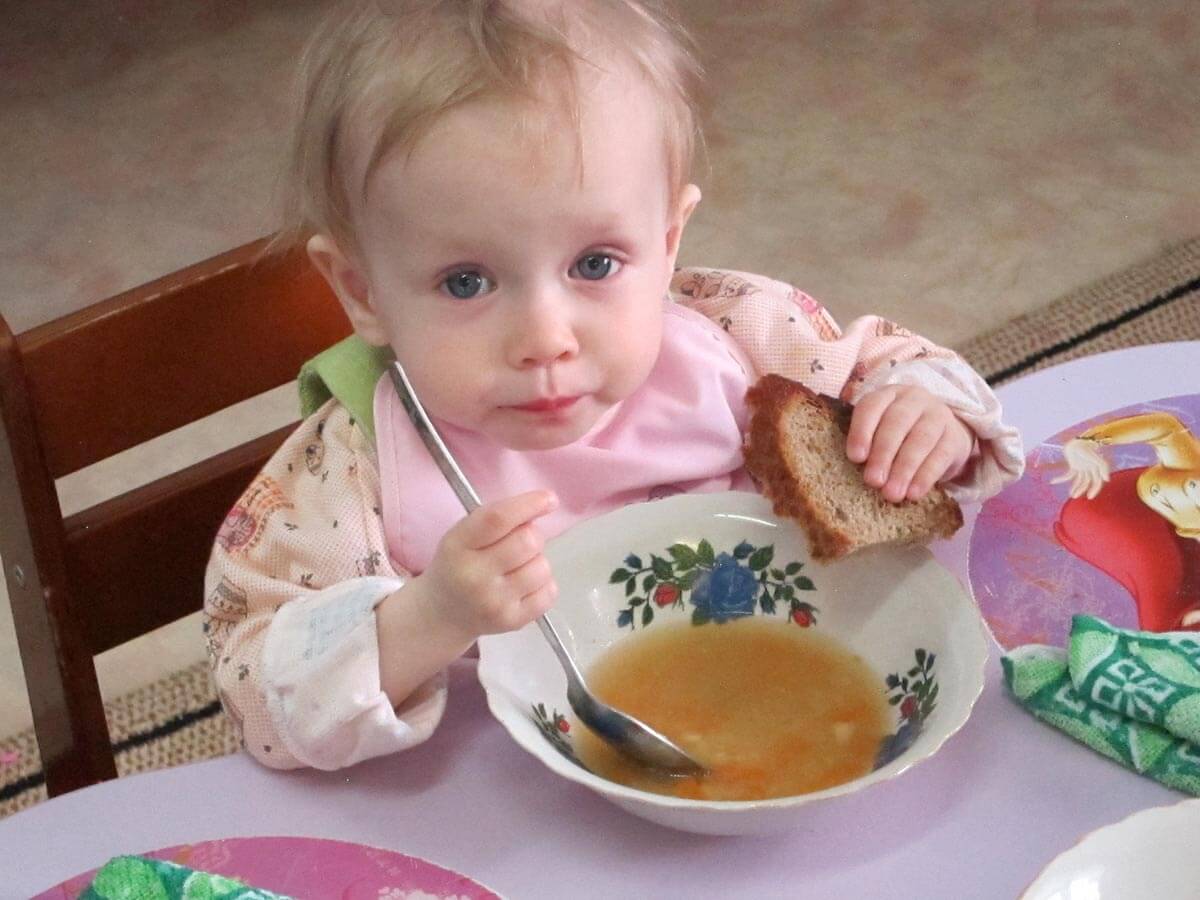
Overall, the Russian and FSU diet can provide many essential nutrients. However, the diet in Russian/FSU baby houses and orphanages is often not nutritionally adequate, which can lead to nutrient deficiencies and inadequate growth—see below for specific nutrients. A common diet in a baby house or orphanage might only include a small amount of meat and veggies (made into a thin stew) noodles, hot kasha, and rice. A drink called compote made from rehydrated fruit and sugar is a common beverage as well as caffeinated tea and coffee.
The traditional Russian/FSU diet is:
High in saturated fats – Fat is essential to any child’s diet, but saturated and trans fat are less heart healthy.
High in sodium – Specific recommendations regarding sodium do not exist for infants and children. It’s not yet clear what effect a salty diet has on children’s long term health, but moderate intake of sodium and plenty of fluids should be encouraged.
Low in fruits and vegetables – Recent immigrants from Russia may suffer some nutritional deficiencies due to inadequate consumption of fruits and vegetables.
Iodine – Iodine is needed for production of thyroid hormone. Deficiency of iodine can lead to development of an enlarged thyroid called a goiter, hypothyroidism, and mental retardation in children whose mothers were iodine deficient during pregnancy.
Iron – Iron is necessary for oxygen delivery to cells and regulation of cell growth. Iron deficiency develops gradually and is commonly seen in women of childbearing age and children. A lack of iron results in an insufficient supply of oxygen to cells eventually causing anemia, fatigue, poor work performance, slow cognitive and social development in children, and decreased immunity.
Manganese – Manganese is an important mineral that aids bone formation and the metabolism of proteins, carbohydrates, and cholesterol. Severe manganese deficiency may result in scaly skin, poor bone formation, and stunted growth.
Riboflavin – Riboflavin is a vitamin that is essential for energy metabolism in cells, the activation of several compounds and vitamins, and protection of cells from oxidative damage. Signs and symptoms of riboflavin deficiency include weakness, sores around the lips, inflammation of the mouth, swollen tongue, anemia, and confusion.
Selenium – Selenium is an essential mineral that acts as a protective antioxidant in the body and regulates thyroid hormone. Selenium deficiency is common in some parts of Russia and FSU where soil concentration of selenium is low. Keshan disease is a cardiac problem that can occur in selenium-deficient children and mothers. Selenium deficiency often accompanies iodine deficiency.
Vitamin A – Vitamin A plays a critical role in healthy vision, growth and development, and immune function. Vitamin A deficiency is common in developing countries, such as China, and is often accompanied by zinc deficiency. Symptoms of deficiency include blindness, diminished ability to fight infections, decreased growth rate, and slow bone development. Vitamin A helps mobilize iron from its storage sites, so a deficiency of vitamin A limits the body’s ability to use stored iron. This results in an “apparent” iron deficiency because iron levels in the blood are low even though body stores are normal.
Vitamin C – Vitamin C is a powerful antioxidant that helps produce collagen and aids in iron absorption. Vitamin C is important for a healthy immune system and plays a role in cardiovascular, neurological, and endocrine systems. Vitamin C deficiency sometimes causes a condition called scurvy, which results in a multitude of symptoms including bleeding gums, skin irritations, bruising, and poor wound healing.
Vitamin D – Vitamin D is needed for calcium absorption and maintenance of calcium levels to enable normal development of bones and prevent muscular spasms caused by low levels of calcium in the blood. A poor diet and lack of exposure to sunlight can result in vitamin D deficiency. A deficiency in childhood can result in development of the disease Rickets in which bones become soft.
Zinc – Zinc is involved in many important processes in the body. Symptoms of zinc deficiency include delayed growth, loss of appetite, impaired immune function, hair loss, diarrhea, delayed sexual maturation, eye and skin lesions, delayed wound healing, taste abnormalities, and mental fatigue.
» See more about common nutrient deficiencies here.

The majority of the population in Russia and FSU generally eat 3 hearty meals per day with the largest meal at lunch. Bread, salad or soup made from beets (Borscht), cabbage, fish, and kasha (buckwheat porridge) are staple foods at mealtimes. Snacking is rare, however, traditionally an array of appetizers (zakuski) starts the meal. These may range from 2 simple dishes such as pickled herring and cucumbers in sour cream to an entire table spread of sandwiches, caviar, pickled vegetables, and hot meat dishes. Bread is served with butter and a small bowl of salt for dipping.
“Try to find a supermarket that sells foods from your child’s native country; refer to foods in native language (for older children).” -Heather, mom to Anna, adopted from Kazakhstan
The transition diet is one you develop to help bridge the gap between your child’s native diet and what eventually will become his or her regular diet at home. The transition diet often includes recipes and foods from the native diet. A good way to start the transition process is to ask exactly what foods your child ate in the orphanage or foster home, using that as a base for your cooking at home. As one parent put it, “I would encourage all parents to adapt the foods they present to mimic what the child had at the orphanage during the first months home. It is an easy adaptation that parents can make to create a more familiar environment during what can be a hard transition.” It may also be helpful to watch the caregivers feed your child at least one meal before returning home. Simple things such as the temperature or texture of foods may be important to your child. One mother wrote, “Our daughter was on formula at the orphanage but they gave it to her very, very hot. It took us a while to realize she wanted everything HOT and would cry hysterically if it wasn’t hot.” Even if you don’t know exactly what your child ate previously, incorporating native foods into his or her diet is a great way to help your child transition to a new culture, as well as preserve traditions from his or her first culture.
Transition foods for children adopted from Russia and other former soviet countries often are based around broths, pureed soups, porridge, and bread. When asked what types of food her children ate while in their Russian orphanage, one mom replied, “The children were fed porridge 2 meals a day and a pureed soup for dinner. There was an occasional hardboiled egg, cottage cheese, apple, or banana given. At 12 months they were taken off formula and not given any milk, only tea to drink. They still enjoy these foods.” Other foods that may be served include cooked cabbage, potatoes (in stews or potato salad), some meats, bananas, compote (fruit boiled down and given in place of juice), and hot dogs. Tea and kefir (in place of milk) are the usual drinks. Some Russian foods your child might remember and enjoy are Russian soups and pancakes (see blini recipe below), pelmini (pasta with meat), perogies, dumplings with pork, and syrniki (cottage cheese pancakes). Formula or milk may be watered down and weaning often takes place well before 12 months.
Once home, foods with soft, smooth, or soupy consistencies usually work best for helping children transition, as many of these children have trouble chewing or adjusting to different textures. Some foods your child might enjoy immediately after adoption includes oatmeal, apple sauce, cottage cheese, eggs, bananas, soups, any pureed foods, kefir, tea, yogurt, or mashed potatoes. One mom suggests pureeing chicken pot pie or shepherd’s pie and adding broth to turn it into a hearty soup. Pureed vegetables added to soups and sauces will also add nutrients your child needs. For older children who can chew well, other good transition foods might include any cheeses or fruits, soups, hot dogs, liverwurst or liver pate on crackers, perogies, fish, peanut butter and jelly sandwiches, pickles and cucumbers, and meat.
Many children from Russian/FSU orphanages struggle with chewing, especially with meat; this can lead to choking on food even among older children. Some parents cited an orphanage diet based mostly on broths, porridge, and other liquid foods as the potential cause for this, or perhaps the child was not given enough time to chew at mealtimes. Difficulty adapting to different textures is also a common problem. One mother said that her twins “were developmentally delayed regarding feeding and did not know how to chew and had not been introduced to a variety of textures, tastes, temperatures, and consistency.” A fear of liquids is also common. One parent found that working with a speech pathologist helped her child recover from this fear after drinking from an open cup at an early age. Hoarding, stuffing, refusing to eat, and difficulty swallowing are also problems with which many children struggle.

Russian Blini are a delicious thin pancake traditionally served with caviar, sour cream, or smoked salmon. Blini recipes usually call for yeast, but using pancake mix makes preparation wonderfully easy. Buckwheat contains no gluten and can be eaten by people with gluten allergy. Buckwheat contains protein, fiber, thiamin, riboflavin, calcium, and phosphorous. Serve blinis for breakfast, lunch, or dinner. Kids will love adding their own toppings. You can experiment with a variety of toppings including jams, fruits, cooked veggies, meat, or fish.
1 cup buckwheat pancake mix, unsweetened
1/2 teaspoon kosher salt
1 egg
1 tablespoon melted butter or vegetable oil
2/3 cup milk (any fat content) or water
Black caviar (our favorite is paddlefish)
Crème fraîche
Chives, snipped
Smoked salmon (optional)
Minced red onion (optional)
To Prepare:
Combine the pancake mix with the salt, egg, butter or oil, and milk or water.
Lightly brush another tablespoon of melted butter onto a skillet over medium-high heat.
When the skillet is hot, spoon the batter into it a tablespoon at a time.
Cook the blinis until tiny bubbles appear, about 1 minute, then flip them and fry until golden brown on each side.
Transfer the blinis to a platter and serve warm with desired toppings.
Kittler PG, Sucher KP (2008). Food and culture, Fifth Edition. Belmont, CA: Thomson Wadworth.
United Nations Children’s Fund, edited by Alexandre Zouev (1999). Generation in jeopardy: children in Central and Eastern Europe and the former Soviet Union. Armonk, NY: M.E. Sharpe, Inc.
Rabotaev EF, Khokhlova EA. Topical problems of micronutrients deficiency in the Chuvash Republic. Gig Sanit 2009; Jan-Feb (1): 36-8.
Tarmaeva II. Trace element imbalance in the organized pediatric collective bodies. Gig Sanit 2008; Sep-Oct (5): 74-6.
Tsikunib AD, Kondratova ES. Assessment of the structure and quality of nutrition as a factor that influences thyroid functional activity. Gig Sanit 2007; Nov-Dec (6): 67-70.
Spirichey VB, Kodentsova VM, Blazheevich NV, et al. The vitamin and trace element status of the personnel of the Chernobyl Atomic Electric Power Station and of preschool children in the city of Slavutich. Fiziol Zh 1994; 40(3-4): 38-48.
Volkotrub LP, Andropova TV. Role of selenium in the etiology and prevention of diseases (review). Gig Sanit 2001; May-June(3): 57-61.
Golubkina NA, Alfthan G. Selenium status of pregnant women and newborns in the former Soviet Union. Biol Trace Elem Res 2002; 89(1): 13-23.
3227 NW Thurman Street, Portland, OR 97210 |
|
|