General Diet/Summary • Nutrition Facts • Possible Deficiencies • Common Foods • Meal Patterns • Where to Shop • Recipes • Resources

The traditional Kazakh diet is heavily meat based. Vegetable intake, especially greens, is often deficient. The typical diet is strongly influenced by that of the early Kazakh nomads, which is why a high emphasis is placed on long-term preservation of food. Fermented dairy products, pickled vegetables, and salted or dried meat are staples of the diet. Noodles, unleavened bread, and many milk products are also eaten on a daily basis. The Kazakh national dish is called beshbarmak, known as “five fingers” because it is traditionally eaten with your hands, is made of lamb or mutton, noodles, and onions. Horse meat is very popular, often served in large uncut pieces which have been boiled. Other popular foods reflect the presence of various ethnic groups that have left their mark on Kazakh culture and include Uzbek plov (fried rice and meat), Russian pelmeny (meat pie), and Uighur manty (dumplings filled with ground meat, onion, pumpkin). Korean dishes are common, particularly salads, due to the influence of Korean immigrants. Tea is served several times a day, while fermented mare’s and camel’s milks are served on special occasions. Each town has an open air food market (similar to farmers’ markets in the United States) that offer seasonal fruits, vegetables, and spices as well as fresh meats and dairy.
Kazakhstan consists of many diverse habitats and seasons can be extreme, which may affect diet quality and nutritional status. While overweight and cardiovascular risk factors are less prevalent in children living in Kazakhstan than those living in Western countries, preventive measures are needed to contain the incidence of overweight that could accompany the modernization of Kazakhstan in the coming years.
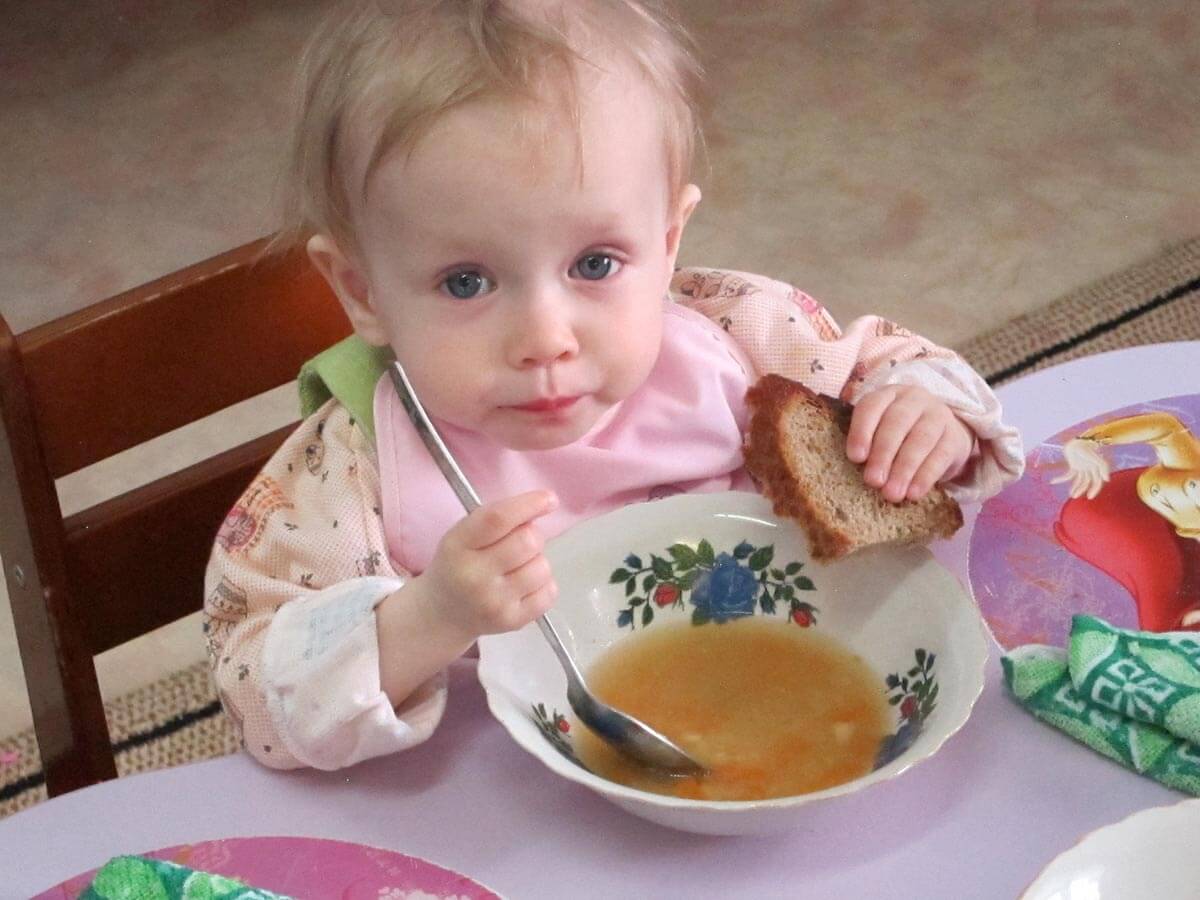
Children living in orphanages/baby houses may have inadequate intake of meat and meat products, milk, fruits, and vegetables. Food provided at a baby house may only include porridge, thin soup, or kefir so total calories and nutrients often don’t meet needs for growth and development. Such a limited and plain pre-adoption diet means that children adopted from Kazakhstan may display sensory defensiveness when exposed to new textures and types of foods.
One study suggests that gender discrimination in food allocation, meaning that boys may preferentially receive more food than girls during times of economic hardship, may result in differences in growth and development. However, not much research has been done in this area. Other nutritional issues children in Kazakhstan may be affected by include intestinal parasites, hereditary disorders, and exposure to environmental pollutants (lead, pesticides, heavy metals).
Calcium – Calcium is needed to build strong bones and teeth. It also plays a role in blood clotting, muscle contraction, and nerve-cell communication. In the long term, dietary intakes well below the recommended levels may impact bone development. Bones increase in size and mass during childhood and adolescence, therefore adequate calcium and vitamin D should be consumed throughout childhood into early adulthood.
Folate – Deficiency may not be due to malnutrition but rather food style since the main food in Kazakhstan is meat and intake of vegetables is often insufficient. Folate is needed for making DNA in new cells. It is also critical for spinal cord and brain development in embryos. Folate contributes to heart health because it disposes of homocysteine, an amino acid that may lead to heart disease.
Iron – Iron is necessary for oxygen delivery to cells and regulation of cell growth. Iron deficiency develops gradually and is commonly seen in women of childbearing age and children. A lack of iron results in an insufficient supply of oxygen to cells eventually causing anemia, fatigue, poor work performance, slow cognitive and social development in children, and decreased immunity.
Iodine – Iodine is needed for production of thyroid hormone. Deficiency of iodine can lead to development of an enlarged thyroid called a goiter, hypothyroidism, and mental retardation in children whose mothers were iodine deficient during pregnancy.
Magnesium – Magnesium is a mineral important in the structure of bone and vital for energy metabolism in the body. Magnesium participates in over 300 chemical reactions in cells and also influences nerve and muscle function.
Phosphorous – Phosphorous is used throughout the body to build strong bones and teeth, maintain acid base levels, store and transfer energy in cells, and make DNA.
Potassium – Potassium is involved in nerve conduction, muscle contraction, and regulation of blood pressure and acid base balance.
Vitamin A – Vitamin A plays a critical role in healthy vision, growth and development, and immune function. Vitamin A deficiency is common in developing countries and is often accompanied by zinc deficiency. Symptoms of deficiency include blindness, diminished ability to fight infections, decreased growth rate, and slow bone development. Vitamin A helps mobilize iron from its storage sites, so a deficiency of vitamin A limits the body’s ability to use stored iron. This results in an “apparent” iron deficiency because iron levels in the blood are low even though body stores are normal.
» See more about common nutrient deficiencies here.
Milk/Milk Products: milk (cow, sheep, camel), fresh and fermented (buttermilk, sour cream, yogurt), cheese, cream
Meat/Poultry/Fish: beef, chicken, goat, horse, lamb, mutton, sausage, variety meats, caviar, seafood
Cereals/Grains: barley, buckwheat, millet, potato starch, rice, wheat
Fruits: apples, apricots, berries, cherries, cranberries, currants, dates, grapes, lemons, melons, oranges, peaches, pears, plums, pomegranates, prunes, quinces, raisins
Vegetables: beets, cabbage, carrots, cucumbers, olives, onions, peas, peppers, potatoes, pumpkin, radishes, tomatoes, turnips
Seasonings: anise, basil, bay leaf, caraway, chives, cinnamon, cloves, coriander, dill, fennel, garlic, ginger, mint, paprika, parsley, pepper, vinegar
Nuts/Seeds: almonds, poppy seeds, sesame seeds, walnuts
Beverages: fruit juice, hot tea, milk, soft drinks
Fats: animal fats, butter, lard, vegetable oils
Sweeteners: honey, molasses, sugar
The people of Kazakhstan are very hospitable and enjoy hosting guests for dinner. If invited to someone’s house for dinner, it is polite to bring something for the host such as pastries. Many customs, including the offering of tea and refreshments, are followed to honor guests. In rural settings, diners may sit on the floor. Dining style is continental with the fork held in the left hand and knife in the right hand, or food is eaten with just the right hand. Meals are leisurely social events. Traditionally, once the adults have eaten the children are allowed to eat the leftovers.
A unique custom is the dastarkhan, a feast for special occasions that includes many appetizers (pastries, fruits, nuts), sorpa (a rich broth) and soups, cold salads, and dairy products. The feast features an entire animal, usually a sheep, different parts of which symbolize the traits desired by those eating them. For example, the head is given to the most honored guest and children may receive an ear so that they will listen and obey.
Most grocery stores
Russian specialty markets
Butchers’ shops
Farmer’s markets (or your own garden)
Internet
Whole Foods and natural food markets
1½ cups rice
⅓ cup slivered almonds
2 garlic cloves, minced
1 medium onion, chopped
½ cup pitted dates, chopped
⅓ cup pitted prunes, chopped
3 dried apricots, chopped
1 tablespoon salt
1 cup lamb, cooked, finely ground
1 teaspoon vegetable oil
Mix the lamb, almonds, fruits, onion, salt, and garlic in a large bowl. Cook the rice until almost done. Add the oil to the rice as it cooks. Add the lamb mixture to the rice and finish cooking until all water is absorbed.
Serves 8
Source: Chef Pyotr Numurdaleshev, Kazakh Aul Restaurant, Almaty, Kazakhstan (http://www.recipesource.com/fgv/rice/04/rec0406.html)
Samsa can be sweet or savory and can be stuffed with various meats, vegetables, and/or fruits. They are a fun food that can be shaped in many different ways.
½ can pumpkin purée
4-6 medium baking potatoes, peeled, coarsely chopped, and boiled
½ medium yellow onion, chopped and sautéed in butter or oil
¼ cup golden raisins
¼ cup chopped walnuts
salt and pepper to taste
Your choice of savory spices (garlic, ginger, chili, cumin, coriander, cilantro)
1-2 boxes puff pastry, defrosted (don’t let pastry get too warm or it will be very sticky)
butter or oil
1 egg yolk, beaten
Preheat oven to 350 degrees. Sauté boiled potatoes in a a little butter or oil for 5-10 minutes. Remove and mix in canned pumpkin. Add onions, raisins, walnuts, and spices. Mix well. Unwrap and unfold the puff pastry dough. Cut puff pastry into 9 squares.
Place a heaping tablespoon of mixture into the center of puff pastry square. Lightly wet the edges of the dough with water. Bring the corners of the dough to the center and pinch closed. Brush the top of the bundle with egg yolk. Bake in the oven for 25-30 minutes until golden brown. Serve with vinegar or soy sauce.
Source: http://mymommymakesit.blogspot.com/2010/05/pumpkin-samsa-recipe-and-felt-food.html
2-4 cups of grated or julienned carrots
1-2 bunches of grated or julienned radishes
1/8 cup olive oil
¼ cup apple cider vinegar
1 tablespoon brown sugar
½ teaspoon ground black pepper
1/8 teaspoon cayenne or ½ teaspoon red pepper flakes
1 teaspoon ground star anise
salt to taste
Mix everything together and refrigerate overnight before serving.
Source: http://mymommymakesit.blogspot.com/2011/03/traditional-nauryz-feast-cultural.html.
Kittler PG, Sucher KP (2008). Food and culture, Fifth Edition. Belmont, CA: Thomson Wadworth. 275-296.
Akilzhanova A, Takamura N, Zhaojia Y, et al. Kazakhstan: a folate-deficient area? Eur J Clin Nutr. 2006; 60: 1141-1143.
Dangour AD, Hill HL & Ismail SJ. Height, weight and haemoglobin status of 6 to 59-month-old Kazakh children living in Kzyl-Orda region, Kazakhstan. Eur J Clin Nutr. 2002; 56: 1030-1038.
Dangour AD, Farmer A, Hill HL, et al. Anthropometric status of Kazakh children in the 1990s. Economics and Human Biol. 2003; 1: 43-53.
Facchini F and Fiori G. The modernizing Kazakhstan: a review of biomedical data. J Physiol Anthropol. 2001; 20(2): 95-103.
Gleason GR and Sharmanov T. Anemia prevention and control in four central Asian republics and Kazakhstan. J Nutr. 2002; 132: 867S-870S.
Hashizume M, Kunii O, Sasaki S, et al. Anemia and iron deficiency among schoolchildren in the Aral Sea region, Kazakhstan. J Trop Pediatrics. 2003; 49(3): 172-177.
Hashizume M, Chiba M, Shinohara A, et al. Anaemia, iron deficiency and vitamin A status among school-aged children in rural Kazakhstan. Pub Health Nutr. 2004; 8(6): 564-571.
Jensen S, Mazhitova Z & Zetterström R. Environmental pollution and child health in the Aral Sea region in Kazakhstan. Sci Total Environ. 1997; 206: 187-193.
Tazhibayev S, Dolmatova O, Ganiyeva G, et al. Evaluation of the potential effectiveness of wheat flour and salt fortification programs in five central Asian countries and Mongolia, 2002-2007. Food Nutr Bull. 2008; 29(4): 255-265.
Mirseitova S (President Kazakhstan Reading Association). Kazakhstan and its people. World Literature Today Kids. 2005; 1(2): 73-75.
http://www.countriesquest.com/asia/kazakhstan/the_people_of_kazakhstan/way_of_life.htm
http://www.kwintessential.co.uk/resources/global-etiquette/kazakhstan.html
http://www.peacecorpswiki.org/Living_conditions_and_volunteer_lifestyles_in_Kazakhstan
http://www.foodbycountry.com/Kazakhstan-to-South-Africa/Kazakhstan.html
3227 NW Thurman Street, Portland, OR 97210 |
|
|