General Diet/Summary • Nutrition Facts • Possible Deficiencies • Meal Patterns • Transition Foods • Recipes • Resources

The Chinese way of eating is healthy and fulfilling. The food in China is as diverse as the country itself. Chinese food is full of flavor and can be prepared in many ways depending on regional differences. A wide array of foods are eaten including numerous fruits, vegetables, and protein items. Grains are the foundation of the diet. Rice is an essential staple and is eaten at every meal. Steamed polished, white, long-grain rice is the preferred choice. Wheat is the second most popular grain and is used to make noodles, thin pancakes, dumplings, and steamed bread. Animal proteins such as beef, chicken, pork, and eggs are commonly eaten as well as fish and seafood of all kinds. Since many people in China are vegetarians or only eat small amounts of meat, soybeans and soy products are very important as a protein source. Soy foods are also eaten as an alternative source of calcium. Beans and legumes are often eaten whole or used to make powders, noodles, and pastes. Vegetables are the star ingredients in many delicious Chinese dishes!
The traditional Chinese diet is:
Low in fat – The Chinese diet is low in saturated and trans fats (the less healthy fats) and provides foods rich in the mono- and poly-unsaturated fats (think fish and vegetable oils). Fat is essential to any child’s diet, but the diet in Chinese orphanages is likely very low in fat.
Low in dairy products – Lactase is the enzyme that breaks down lactose sugar in milk and other dairy products. Lactose intolerance is the inability to digest lactose due to a lactase deficiency. Many Chinese people are lactose intolerant and rely on soy milk, tofu, soy products, and leafy green vegetables as alternative sources of calcium.
High in complex carbohydrates – Complex carbohydrates are found in fruits, vegetables, nuts, seeds, and grains. These foods contain fiber, which is important for digestive health.
High in sodium – Specific recommendations regarding sodium do not exist for infants and children. It’s not yet clear what effect a salty diet has on children’s long term health, but moderate intake of sodium and plenty of fluids should be encouraged.
Iron – Iron is necessary for oxygen delivery to cells and regulation of cell growth. Iron deficiency develops gradually and is commonly seen in women of childbearing age and children. A lack of iron results in an insufficient supply of oxygen to cells eventually causing anemia, fatigue, poor work performance, slow cognitive and social development in children, and decreased immunity.
Vitamin A – Vitamin A plays a critical role in healthy vision, growth and development, and immune function. Vitamin A deficiency is common in developing countries, such as China, and is often accompanied by zinc deficiency. Symptoms of deficiency include blindness, diminished ability to fight infections, decreased growth rate, and slow bone development. Vitamin A helps mobilize iron from its storage sites, so a deficiency of vitamin A limits the body’s ability to use stored iron. This results in an “apparent” iron deficiency because iron levels in the blood are low even though body stores are normal.
Calcium – Calcium is needed to build strong bones and teeth. It also plays a role in blood clotting, muscle contraction, and nerve-cell communication. In the long term, dietary intakes well below the recommended levels may impact bone development. Bones increase in size and mass during childhood and adolescence, therefore adequate calcium and vitamin D should be consumed throughout childhood into early adulthood.
Vitamin D – Vitamin D is needed for calcium absorption and maintenance of calcium levels to enable normal development of bones and prevent muscular spasms caused by low levels of calcium in the blood. A poor diet and lack of exposure to sunlight can result in vitamin D deficiency. A deficiency in childhood can result in development of the disease Rickets in which bones become soft.
Zinc – Zinc is involved in many important processes in the body. Symptoms of zinc deficiency include delayed growth, loss of appetite, impaired immune function, hair loss, diarrhea, delayed sexual maturation, eye and skin lesions, delayed wound healing, taste abnormalities, and mental fatigue.
Iodine – Iodine is needed for production of thyroid hormone. Deficiency of iodine can lead to development of an enlarged thyroid called a goiter, hypothyroidism, and mental retardation in children whose mothers were iodine deficient during pregnancy.
Selenium – Selenium is an essential mineral that acts as an antioxidant in the body and regulates thyroid hormone. Selenium deficiency is common in some parts of rural China where soil concentration of selenium is low. Keshan disease is a cardiac problem that can occur in selenium-deficient children and mothers. Selenium deficiency often accompanies iodine deficiency.
» See more about common nutrient deficiencies here.
The Chinese generally eat 3 meals per day with snacks. The composition of the meal is governed by an all important balance of yin and yang foods and the proper amounts of fan and cai. Fan includes grains, such as rice or noodles. Cai includes cooked meats and vegetables. All courses of a meal are served at once. Each diner has a bowl of rice or noodles and can take what they desire from the communal serving plates at the center of the table. Food is eaten with chopsticks, and a porcelain spoon is used for soup. The most common beverage to accompany a meal is hot tea or soup.
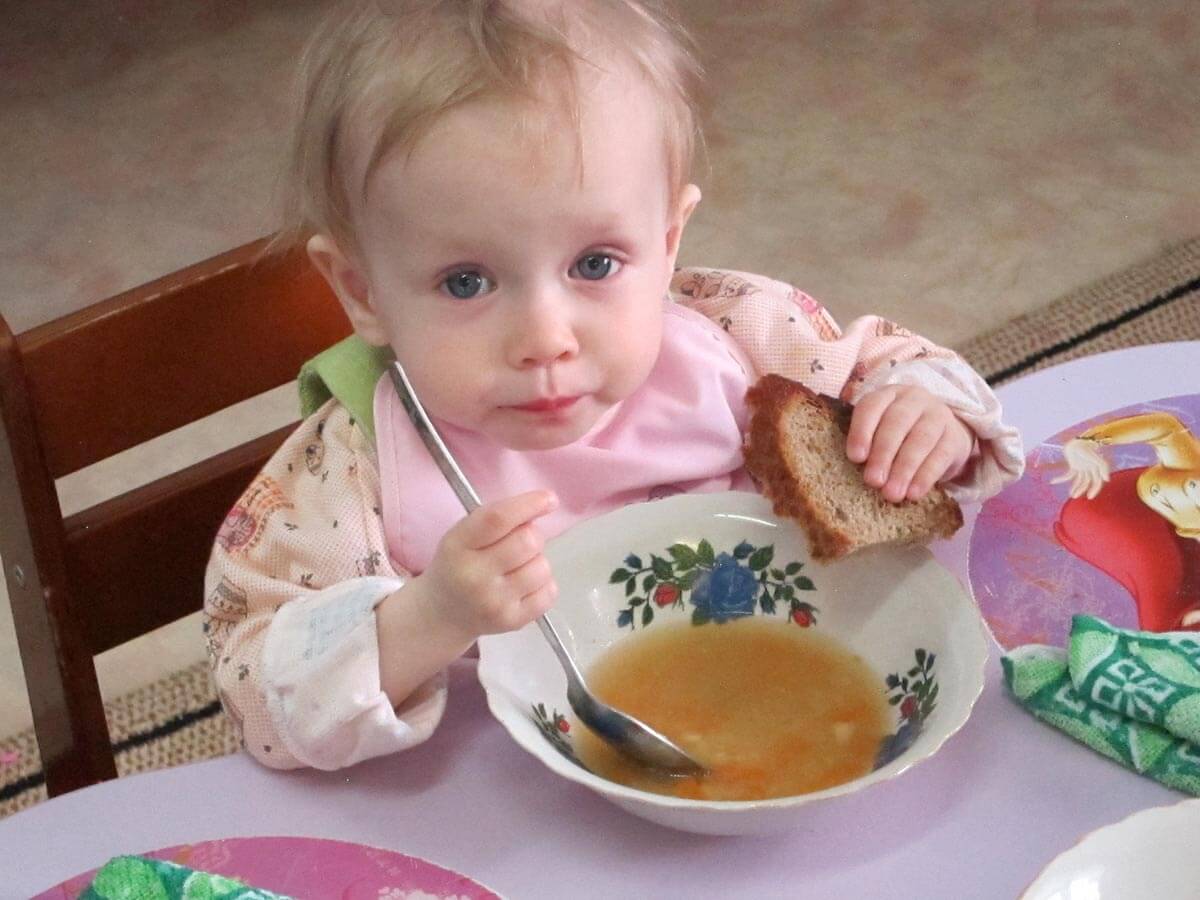
The transition diet is one you develop to help bridge the gap between your child’s native diet and what eventually will become his or her regular diet at home. The transition diet often includes recipes and foods from the native diet. A good way to start the transition process is to ask exactly what foods your child ate in the orphanage or foster home, using that as a base for your cooking at home. As one parent put it, “I would encourage all parents to adapt the foods they present to mimic what the child had at the orphanage during the first months home. It is an easy adaptation that parents can make to create a more familiar environment during what can be a hard transition.” It may also be helpful to watch the caregivers feed your child at least one meal before returning home. Simple things such as the temperature or texture of foods may be important to your child. One mother wrote, “Our daughter was on formula at the orphanage but they gave it to her very, very hot. It took us a while to realize she wanted everything HOT and would cry hysterically if it wasn’t hot.” Even if you don’t know exactly what your child ate previously, incorporating native foods into his or her diet is a great way to help your child transition to a new culture, as well as preserve traditions from his or her first culture.
Transition foods for children adopted from China often are based around rice, noodles, eggs, and meat. Familiar foods may include congee (see recipe below), rice, and eggs in many forms, such as steamed eggs (see recipe below), hard boiled eggs, and egg drop soup. Other familiar foods might include stir-fried rice with a little meat and veggies, boiled rice porridge, dumplings, noodles, peas, chicken, and fruit such as bananas and mandarin oranges. Depending on the province the child is from, spicy foods may be familiar and preferred.
Some children from Chinese orphanages may need to be on a soft food diet, even if it does not seem age appropriate. Sometimes children in orphanages are on a soft or liquid diet until they are 3 or 4 years old due to lack of funds for solid foods. Formula is often diluted and sometimes sweetened with sugar. If your child has been on a soft food diet, start with simple, soft foods such as bananas, eggs and rice and slowly introduce new foods and textures.
7 ½ ounces chicken broth
1 egg
seasonings to taste (eg: finely chopped green onion, salt, pepper)
Whisk together and microwave at medium power for 8 minutes.
A popular breakfast food in China, congee is similar to a porridge. Fish, chicken, shrimp, meat, peanuts, sesame seeds, and eggs can be added to create an even heartier porridge. Congee is considered to be a restorative, easily digestible and nourishing to infants. This easy congee recipe is made in the slow cooker and can be prepared for breakfast, lunch, or dinner.
5 cups water (chicken, beef, or fish stock)
1 cup grain (short-grain brown rice, millet, oatmeal, quinoa, 12-grain meal, etc)
optional spices (cinnamon, cloves, nutmeg, ginger)
To Prepare: Combine all ingredients in a slow cooker, and cook on low heat for 6-8 hours. Serve with a little honey* or maple syrup and any variety of fruit (apples, banana, blueberries, mango, raspberries, blackberries, etc).
Try using different condiments such as egg and seafood for a savory congee.
Optional condiments: raisins, dried plums, fish, meat, poultry, fried egg, seafood, fresh fruit
Tip: Store extra congee in 6 ounce mason jars or baby food jars and keep in the refrigerator for up to two weeks.
*Do not give honey to children under 1 year of age.
Kittler PG, Sucher KP (2008). Food and culture, Fifth Edition. Belmont, CA: Thomson Wadworth.
Guangwen T, Xiu-fang G, Shan-ming H, Qing-mei X, Qui Jian, Dolnikowski GG, et al. Green and yellow vegetables can maintain body stores of vitamin A in Chinese children. Am J Clin Nutr. 1999;70: 1069-76.
McWilliam, M (2007). Food around the world: a cultural perspective, Second Edition. Upper Saddle River, NJ: Pearson Prentice Hall.
Walker, WA (2005). Eat, play, and be healthy: The Harvard Medical School guide to healthy eating for kids. New York, NY: McGraw Hill.
Xiao-Yang S, Hambidge KM, Xi-Xiang Z, June-Xue N, Bailey KB, Gibson RS, et al. Major variables of zinc homeostasis in Chinese toddlers. Am J Clin Nutr 2006;84: 389-94.
Yang Y, Mei HE, Hongmei GUI, Bian L, Wang Z. The prevalence of lactase deficiency and lactose intolerance in Chinese children of different ages. Chinese Medical Journal 2000; 113(12): 1129-1132.
Yiming XIA, Hill KE, Burk RF. Biochemical studies of a selenium-deficient population in China: measurement of selenium, glutathione peroxidase and other oxidant defense indices in blood. J Nutr 1989;119: 1318-26.
National Institutes of Healthy Office of Dietary Supplements: http://dietary-supplements.info.nih.gov/factsheets/selenium.asp
3227 NW Thurman Street, Portland, OR 97210 |
|
|