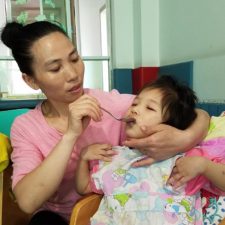
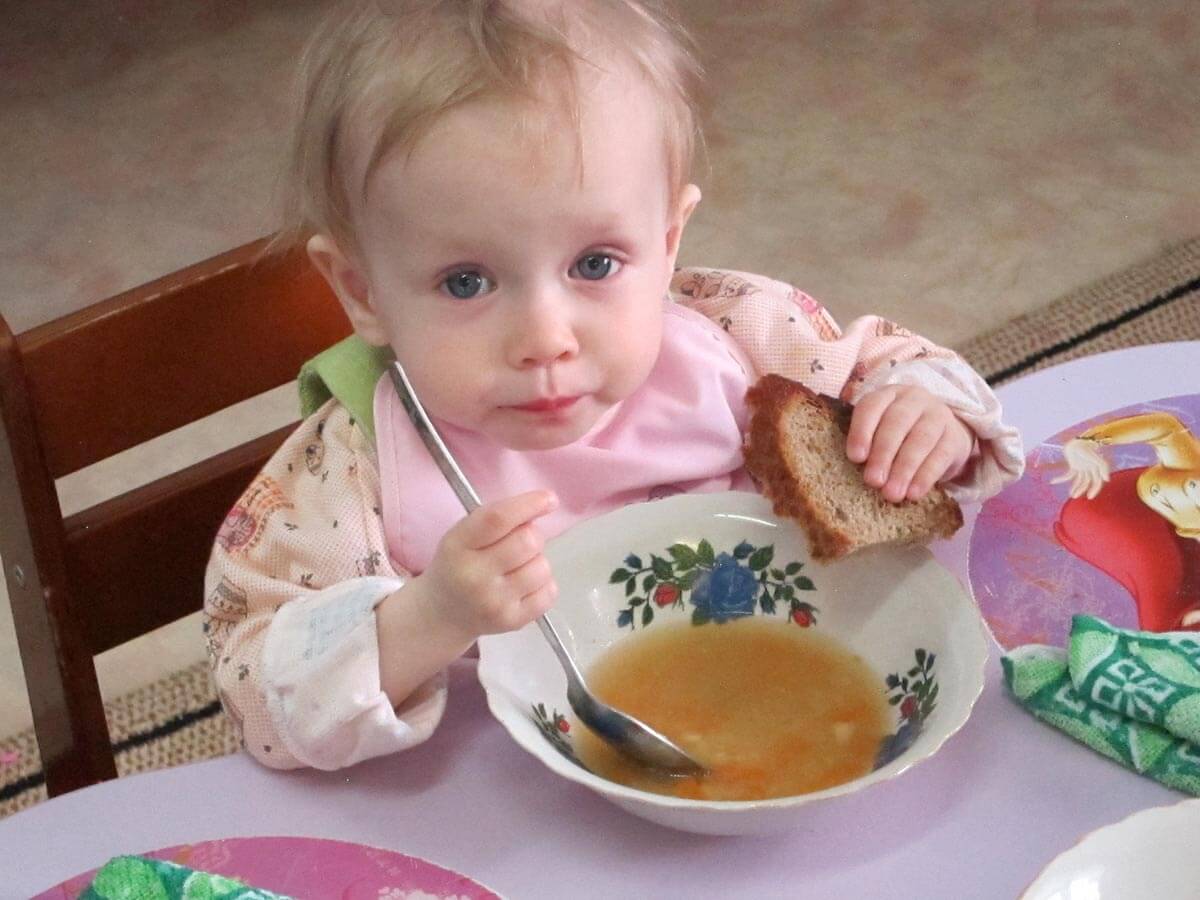
Some post-institutionalized children may have difficulty with the physical aspects of eating. They may not be very good at oral motor skills like sucking, chewing, and swallowing. The strength and coordination of the mouth and jaw are the foundation for feeding and speech.
Children in orphanages are often fed in such a way that their oral-motor skills are at risk of delayed or abnormal development. Here’s why:
Babies are fed through bottle nipples with extra large holes in order to speed up the feeding process. These babies generally develop the skills needed to prevent choking, but they may not develop a strong, efficient sucking pattern.
In some countries, babies are transitioned very early from bottles to cups, further decreasing opportunities to develop sucking.
When the orphans transition to solid food, the food is often bland and with very little texture. As a result, the children have limited opportunities to further develop the muscles of their speech articulators (tongue, lips, cheeks, jaw).
“Be patient, seek out the advice of a knowledgeable pediatrician. Consider talking with a dietitian or occupational therapist if your child is having trouble with new food textures.” -Betsy, mom to Caleb, adopted from Kyrgyzstan
Since foster children are at a higher than average risk of developmental delays, they are also at risk for oral-motor difficulties. Early neglect can mean fewer opportunities to develop oral-motor skills, so foster children should be observed closely while eating to see if they are demonstrating oral-motor delays.
Common symptoms of oral-motor delay/disorder include:
An open-mouthed posture with a protruding tongue lacking tone
A messy eater who has difficulty managing a variety of textures
Difficulty chewing harder foods
Delayed speech sound acquisition with difficult to understand speech
Parents concerned about their children’s oral motor skills should contact a speech-language pathologist for an evaluation. The speech-language pathologist can provide suggestions for improving the strength and coordination of the muscles needed for speech and feeding. If necessary, the child can receive on-going therapy services to help with feeding and/or speech.
3227 NW Thurman Street, Portland, OR 97210 |
|
|